The best restaurant training software helps new hires learn the job and gives managers a clear view of progress. Carvin combines AI-made lessons, mobile-ready training, and real-time completion tracking. Here are 10 options, with the type of restaurant each one may suit.
Table of Contents
- Carvin
- Schoox: Mobile-friendly learning for multi-location brands
- Flow Learning by MAPAL: Hospitality-focused learning and onboarding
- Typsy: Hospitality video lessons in multiple languages
- Trainual: Trackable SOP-based onboarding
- TalentLMS by Epignosis: Straightforward onboarding and compliance
- Coursebox: AI-assisted course creation from restaurant materials
- iSpring LMS: A general LMS for existing course content
- Opus: Frontline training and operations for multi-unit brands
- ShiftTrained: Restaurant training with Toast and Square sync
- Frequently Asked Questions
- Conclusion
1. Carvin
Carvin is AI-powered training software for hospitality teams. It turns recipes, videos, and procedures into mobile-ready training modules, then helps you assign and track them across locations. We built it for operators who want the same standards on every shift without asking managers to rebuild lessons by hand.
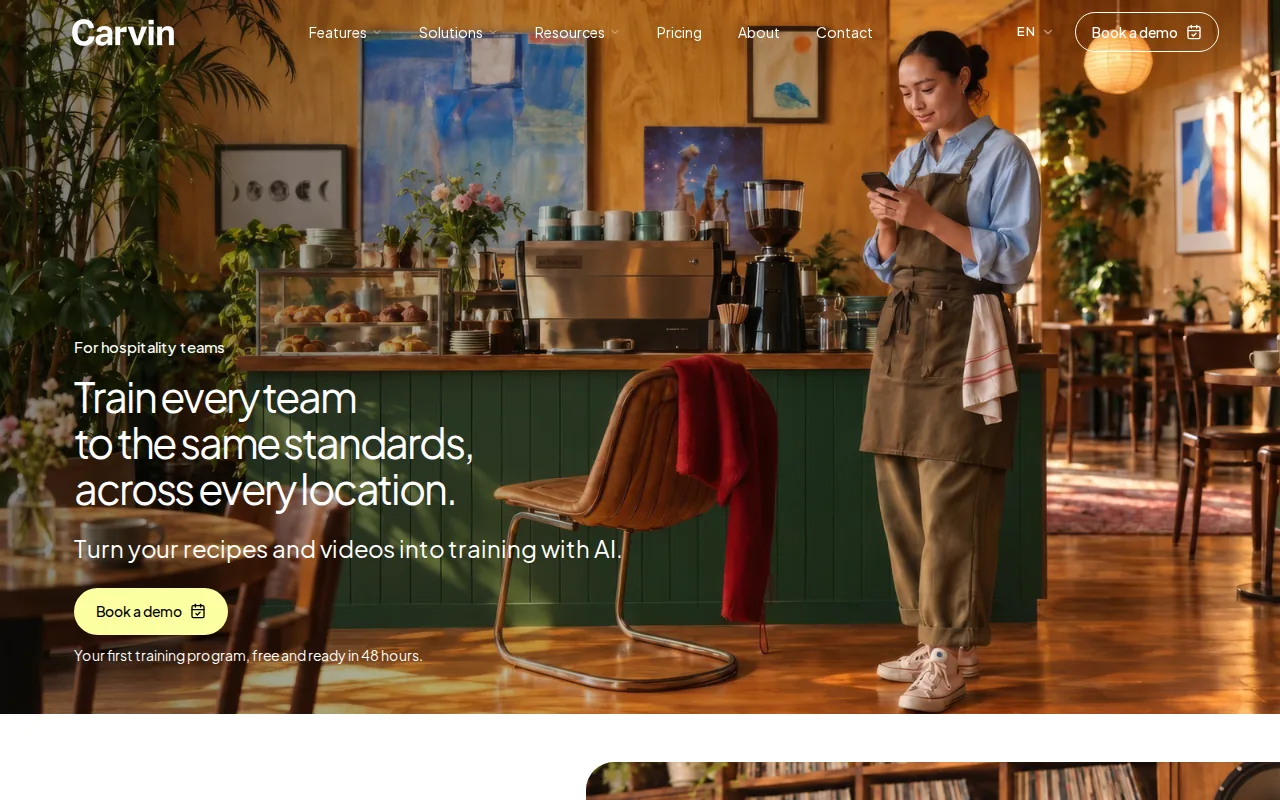
For example, film a barista demonstrating a drink recipe. Carvin can edit the video and add captions, so the lesson is easier to share with new hires. Teams can also use voice-based updates to revise training when a procedure changes. Managers can check completion in real time.
Start with the tasks that cause the most repeat coaching, such as opening duties or allergy steps. Our restaurant staff onboarding checklist can help you map the first lessons. Carvin says its platform helps restaurants reduce onboarding time by 40%.
2. Schoox: Mobile-friendly learning for multi-location brands
Schoox is a learning platform for restaurants that need to keep training consistent across brands, franchises, or locations. Its mobile access lets staff complete lessons when a shift allows, while managers can follow progress across the organization.
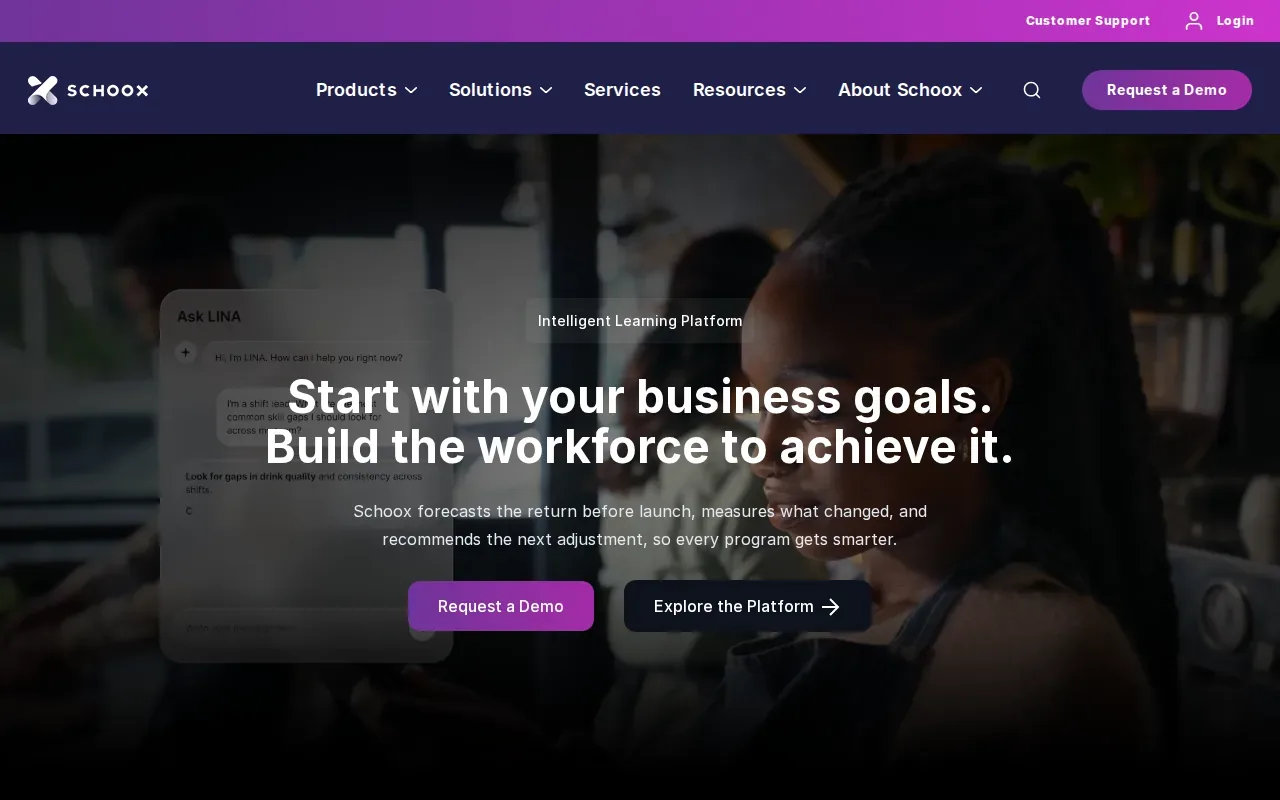
Teams can build short courses and assessments for phones, send updates through notifications or messages, and use reports to check course completion. Schoox also supports training in 32 languages. That can help a multi-language team learn from the same core materials, though operators should still review key safety terms in each version.
Its franchise setup can reflect different brands, roles, permissions, and locations. Schoox says it can connect to other software through file transfer or APIs, which may help when training needs to work alongside existing systems. Consider it when your company has several sites and needs centralized oversight.
3. Flow Learning by MAPAL: Hospitality-focused learning and onboarding
Flow Learning by MAPAL is a learning platform built for hospitality. It brings onboarding, bite-sized lessons, recipe cards, and compliance training into one system, which makes it a fit for restaurants that want materials shaped around hospitality work.
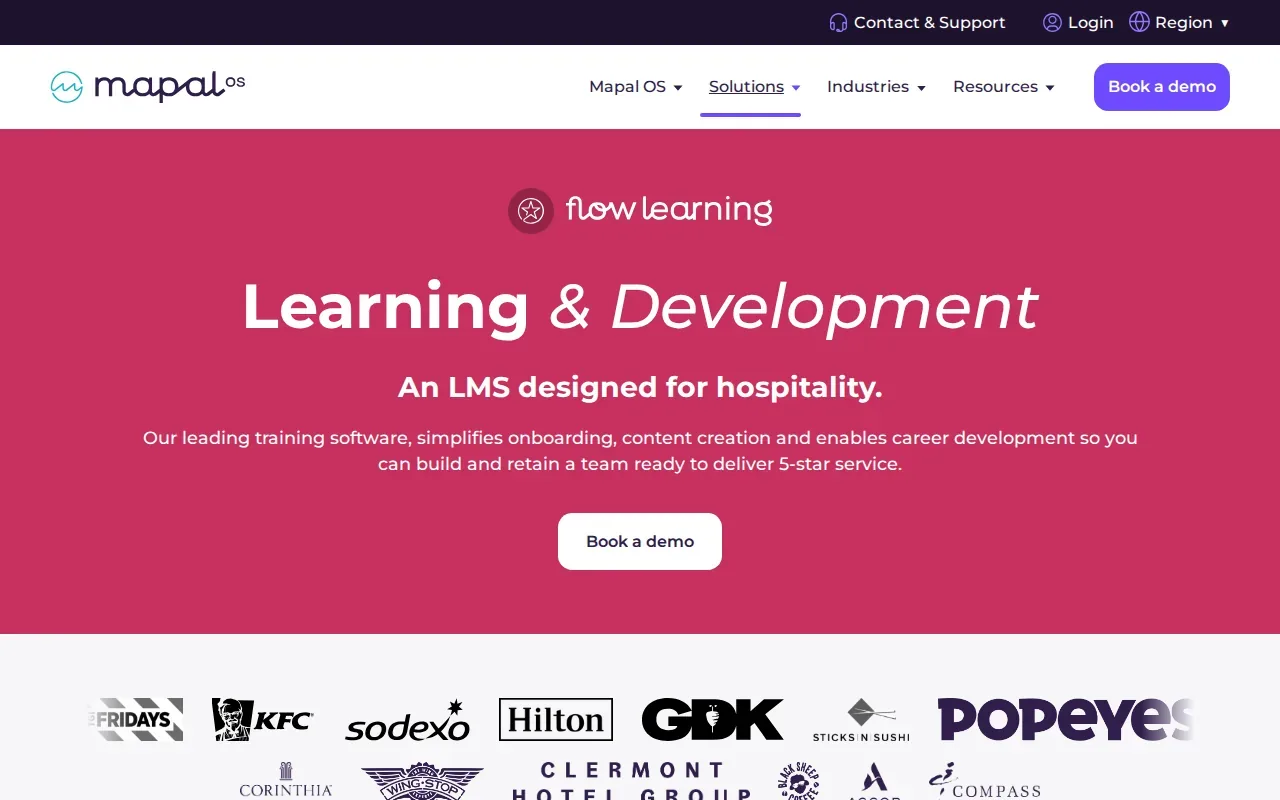
Managers can create or upload content for teams across sites and in multiple languages. Knowledge checks give staff a quick way to show what they understood. Recipe cards can keep recipe and allergen details easy to find, while a training calendar helps employees see what they need to complete.
For compliance, teams can assign required learning and review completion through dashboards. Automated refresher training can remind staff when a course needs another pass. The platform also includes career development tools, so operators can track goals and skills as employees move into new roles. It may suit groups that want training and development in the same system.
4. Typsy: Hospitality video lessons in multiple languages
Typsy is a hospitality video-learning library with more than 2,000 ready-made lessons on service, food, and beverage. Its lessons are available in more than 40 languages, which can help when a restaurant needs useful learning content without producing every course itself.
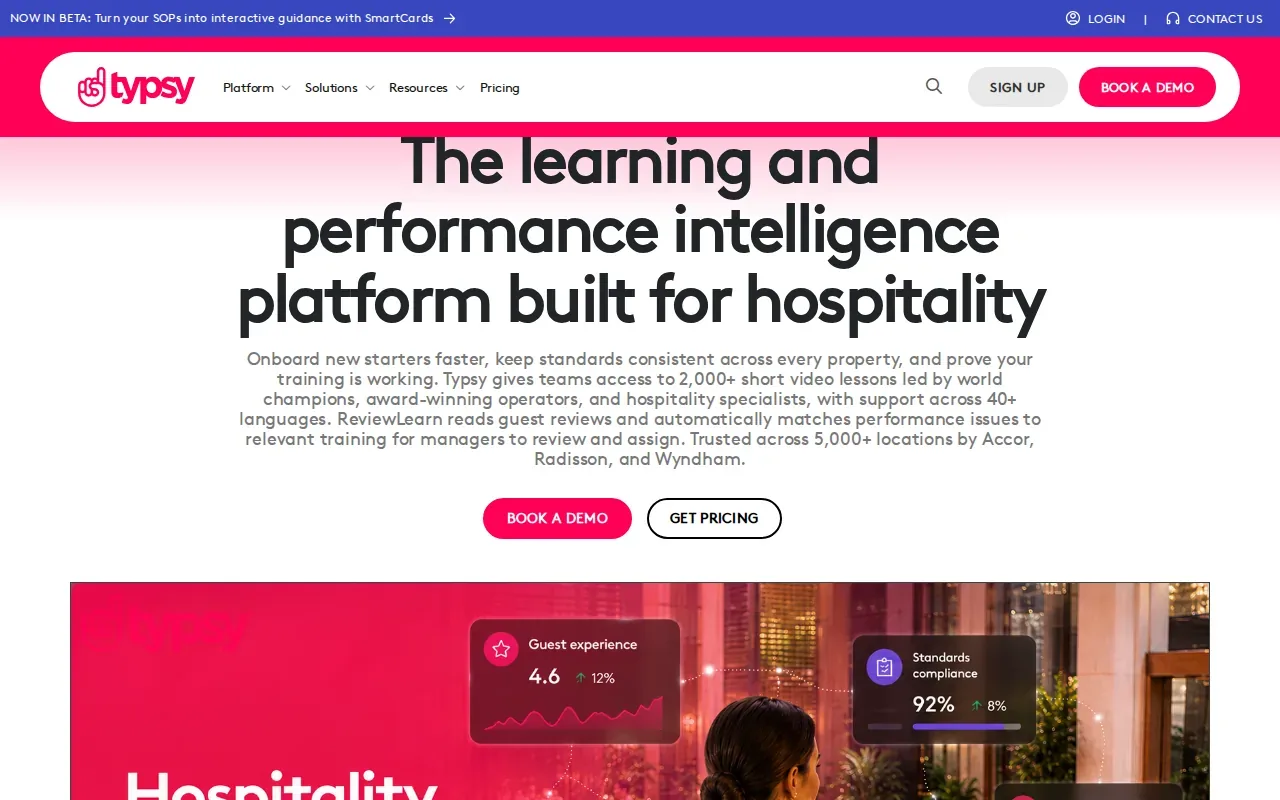
A manager might assign a short service lesson before a new menu launch, then use a shift huddle to discuss how it applies on the floor. The ready-made library can cover common hospitality topics, while language options may help more team members take part. Check that the lessons match your menu, service style, and local rules before assigning them.
Typsy starts at US$120 per member per year for up to 100 members. If language access and ready-made video content are your main needs, it’s worth comparing that model with the time your team would spend making its own lessons. For a French-language onboarding reference, see our French restaurant staff onboarding checklist.
5. Trainual: Trackable SOP-based onboarding
Trainual turns SOPs and playbooks into trackable onboarding for multi-location restaurants. It may fit teams that already know how work should be done but need a clearer way to teach the process to each new hire.
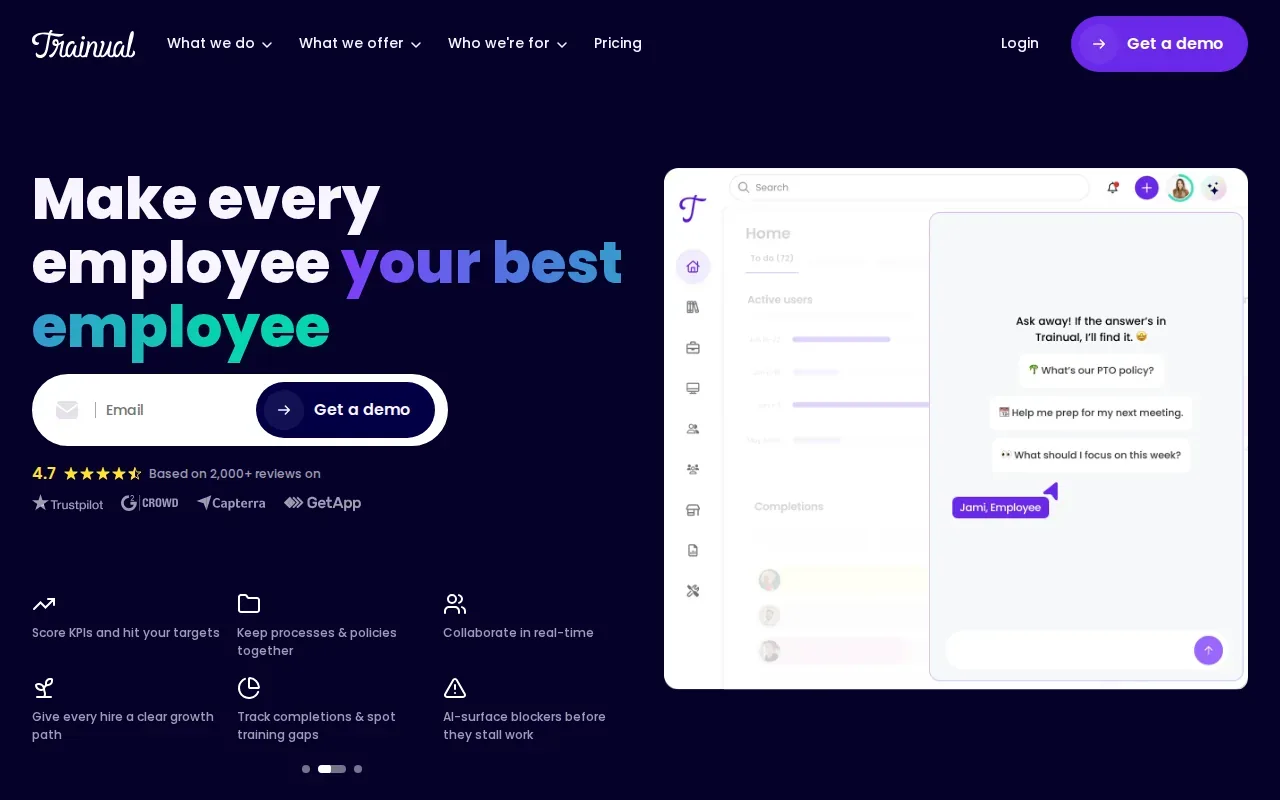
Put a service procedure or closing routine into a learning path, then assign it to the roles that need it. A shared set of documented steps can help managers avoid giving different instructions at each site. Mobile-first lessons also let employees review training away from a desktop.
Think of a new server learning how to handle a guest request. The SOP can explain the expected process, while a manager still checks how the employee handles it during a shift. That distinction matters: reading a procedure records exposure, but a floor check can show whether the person can carry it out. Trainual is a sensible shortlist option when SOP-based onboarding is the main job.
6. TalentLMS by Epignosis: Straightforward onboarding and compliance
TalentLMS by Epignosis is a general learning platform suited to straightforward onboarding and compliance training. It may work for restaurants that want to organize lessons and quizzes without needing a hospitality-specific content library.
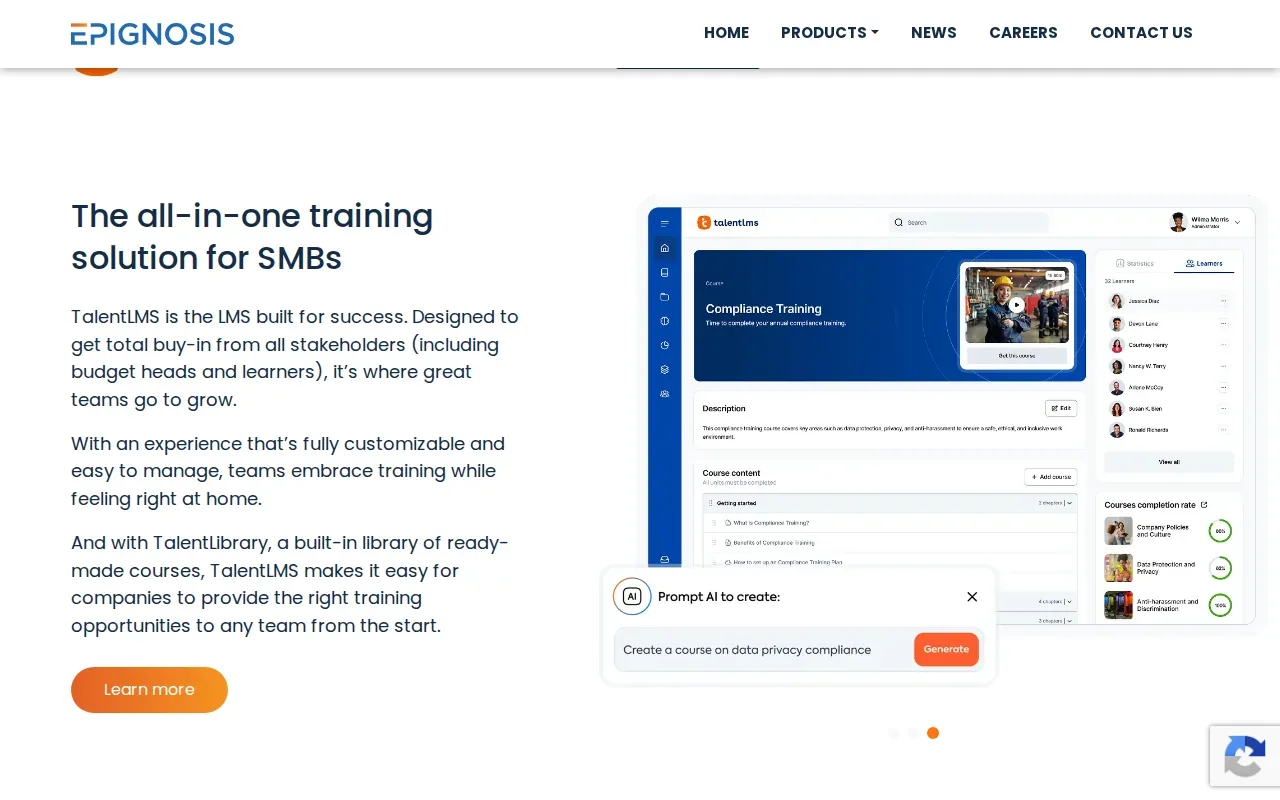
Teams can use it to assign onboarding materials and track course progress. The platform also integrates with popular apps. That could matter if managers want training to sit alongside tools already used by the business, but check that the integrations match your own setup.
TalentLMS starts from $149, depending on users. For a small team, compare the expected user count with the training you plan to assign. For a larger group, check how the reporting and account structure support your locations before moving existing courses. Its strength in this shortlist is a simpler starting point for basic learning needs.
Key Takeaway: Match the platform to the work you need it to do. SOP onboarding, ready-made lessons, and shift-level progress checks call for different strengths.
7. Coursebox: AI-assisted course creation from restaurant materials
Coursebox uses AI to turn restaurant materials into branded mobile courses. The inputs include menus, SOPs, and food-safety documents, which can help teams build training from content they already use.
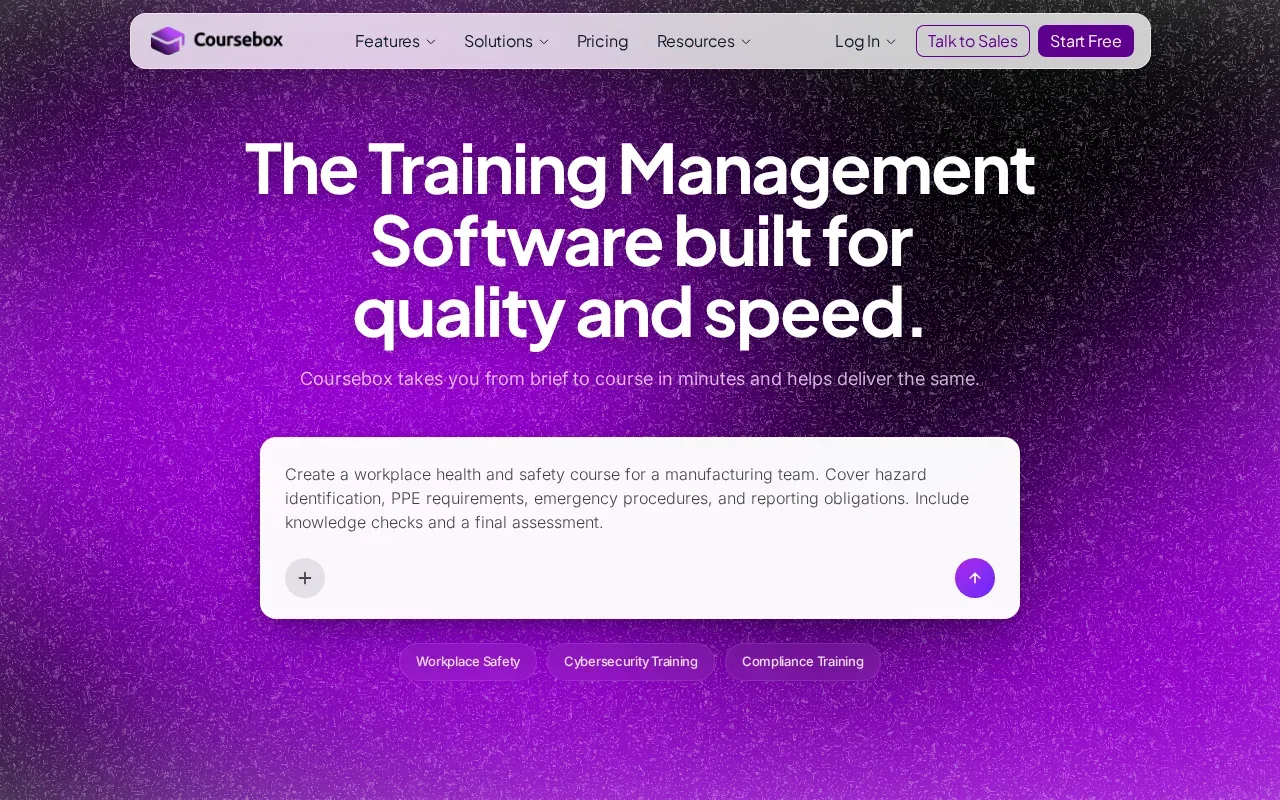
Courses can be delivered on a phone or computer, and Coursebox is free to start with unlimited learners. That may suit an operator who wants to test course creation with a small set of materials before building a broader program. Review any AI-generated content before assigning it, especially when the lesson covers food safety or allergens.
Imagine updating a menu and needing a short lesson for servers. A draft course can give the team a starting point, but someone who knows the menu should check that the details are right. Coursebox is worth considering when producing training content takes more time than delivering it.
8. iSpring LMS: A general LMS for existing course content
iSpring LMS is a general learning platform with a restaurant solution page. It may be a better fit for teams that already have course content, especially slide-based materials, than for operators starting from a blank page.
The platform includes a mobile app for staff learning. Restaurants can use a shared digital space to deliver onboarding or required training across locations, while role-based learning helps direct content to different staff groups. That can help when servers, kitchen staff, and managers need different lessons.
iSpring LMS starts at US$8,286 per year for 100 users. Compare that cost with your expected user count and the amount of existing content you can reuse. It may suit a larger training program with established materials; a restaurant with only a few procedures to teach may want to weigh simpler options first.
9. Opus: Frontline training and operations for multi-unit brands
Opus is designed for frontline training and operations at multi-unit brands. It connects employee learning with the work teams do during a shift, which may appeal to operators who need common standards across several locations.
Its restaurant materials describe mobile access, multilingual content, and manager check-ins. Managers can use those check-ins to follow up on how a team member applies training, rather than relying only on course completion. That can help when a procedure needs both a lesson and an in-person skills check.
Opus may be a fit if staff need training alongside operational resources. Think about a changed service standard: employees need to learn the update, and managers need a way to see whether it’s being used. Check how its workflows fit your own roles and location structure before choosing it.
10. ShiftTrained: Restaurant training with Toast and Square sync
ShiftTrained turns menu information into quizzes staff can take on their phones. Its live Toast and Square sync can import menu details, while an inspector-ready training report can show who completed training and when.
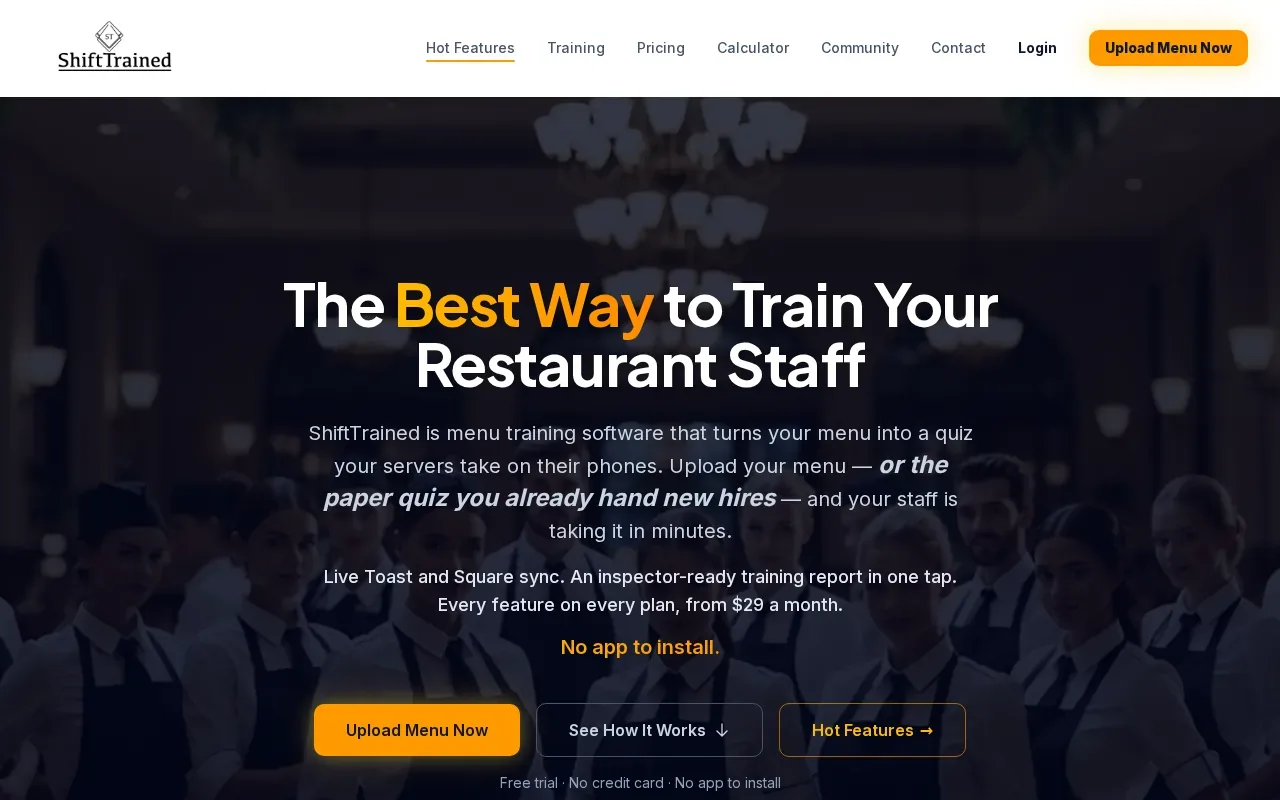
This focus makes it a fit for restaurants that need servers to know dishes, drinks, specials, and allergen details. When the menu changes in a connected POS, ShiftTrained says it updates the training questions. Teams can also upload a menu or an existing written quiz.
ShiftTrained starts at $29 per month. The table below sums up the job it handles best and a useful question to ask before you choose it.
Decision point| ShiftTrained fit| Question for your team
---|---|---
Menu knowledge| Phone-based quizzes built from menu details| Is menu learning your main training need?
POS changes| Live sync with Toast and Square| Does your restaurant use one of these systems?
Inspection records| One-tap training report| Will managers need to show completion records?
If your main challenge is keeping menu knowledge current, those functions are specific to that workflow. For broader onboarding across many roles, compare it with a platform built around a wider training program.
Pro Tip: Before you commit, test one real lesson with a new hire and ask a manager to review the completion record. That small trial can reveal whether the workflow fits a live shift.
Ready to reduce repeat onboarding work? See Carvin pricing
Frequently Asked Questions
What is the best restaurant training software for a small team?
The best fit for a small team depends on whether you need to build lessons, teach menu knowledge, or organize SOPs. Coursebox is free to start with unlimited learners, while ShiftTrained starts at $29 per month for menu quizzes. Compare the specific task you need to solve, then test the staff experience before rolling it out.
Can restaurant training software work on employees’ phones?
Yes, several options in this list support phone-based learning. Carvin creates mobile-ready modules, Schoox supports mobile learning, and ShiftTrained quizzes run on phones. Before choosing, have staff try a lesson on the devices they use at work. Confirm that the format is easy to read and finish between tasks.
Which restaurant training platforms support multiple languages?
Typsy provides ready-made lessons in more than 40 languages, while Schoox supports restaurant training in 32 languages. Flow Learning by MAPAL also supports content delivery in multiple languages. Check the languages your staff need and have a fluent speaker review safety instructions before assigning them.
How can restaurants track compliance training?
Use a platform that records course completion and gives managers a clear way to review progress. Flow Learning by MAPAL supports mandatory learning and completion dashboards, while ShiftTrained provides an inspector-ready training report. Keep the training matched to your own requirements, and check whether staff need a quiz, a certificate, or an in-person skills review.
Conclusion
For multi-location restaurants that want AI-assisted lesson creation, mobile training, and real-time progress tracking together, start with Carvin. Pick one recurring training task, turn it into a lesson, and review the pricing options to plan your next step.