A restaurant LMS gives your team one place to learn job skills, review procedures, and track training. For multi-location restaurant groups that need a program running fast, Carvin, training software for restaurants and hospitality teams, turns recipes, videos, and procedures into mobile-ready lessons.
Here are 10 options and selection categories, with a clear look at which needs each one fits best.
Table of Contents
- Carvin
- Opus for multi-location operations
- Trainual for documented processes and connected systems
- Operandio for HQ oversight and franchise simplicity
- Integration-focused restaurant LMS
- Mobile-first restaurant LMS for on-the-floor learning
- Food safety and compliance-focused restaurant LMS
- Multilingual or AI-personalized restaurant training
- Gamified restaurant LMS for staff engagement
- Restaurant LMS for analytics, scale, and cost visibility
- Restaurant LMS comparison table and selection checklist
- FAQ
- Conclusion
1. Carvin
Carvin is AI-powered training software built for hospitality teams that need the same standards across locations. It’s a strong fit for restaurant owners, operations leaders, and training managers who want to turn existing recipes and procedures into lessons without starting from a blank page.
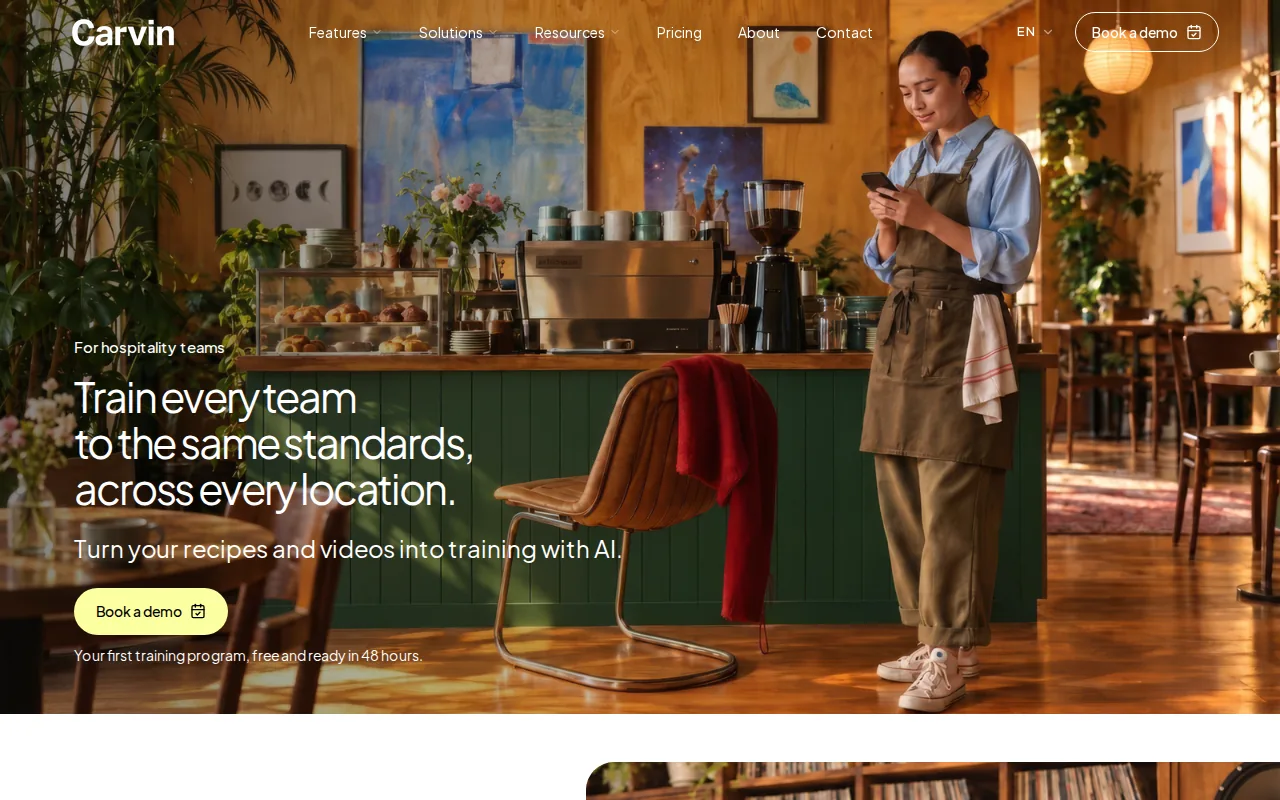
Carvin can automatically convert recipes, videos, and procedures into mobile-ready training modules. It also has video editing and voice-based content updates, so a manager can capture a new process and revise learning materials as the operation changes. Completion tracking gives leaders a current view of who has finished each assignment.
Carvin says restaurants have reduced onboarding time by 40%, managers save 6 to 8 hours per month, and training completion reaches 92%. It also says a first training program can be built within 48 hours. These figures make it a useful choice when the main goal is faster rollout, rather than a long integration project.
We help teams standardize training across locations. If you want to see how procedures become teachable lessons, start with the restaurant SOP guide and templates.
Key Takeaway: Carvin suits restaurant groups that want AI-assisted content creation, mobile lessons, and clear completion tracking.
2. Opus for multi-location operations
Opus is a training and operations platform for multi-unit brands, including restaurants, franchises, fitness businesses, and car washes. Its restaurant training tools suit groups that want to tie digital learning to shift work across many locations.
Restaurant teams can use mobile lessons on iOS and Android, or set up shared tablet stations. Opus also supports HRIS and data integrations. That can help when employee records and training assignments need to stay connected across a large team.
Its training modules can support onboarding and standards reinforcement, while completion data helps leaders see progress. For a restaurant group with many locations and established HR systems, those connections may matter more than rapid content creation.
Carvin takes a different route. It focuses on hospitality training content, AI that turns recipes and procedures into mobile lessons, voice updates, and a stated 48-hour path to a first program. Choose Opus when integration needs lead. Choose Carvin when you want to get restaurant content into training quickly.
3. Trainual for documented processes and connected systems
Trainual helps teams organize company processes and assign training by role. It may suit independent restaurants and smaller groups that want a central home for SOPs, policies, and how-to material.
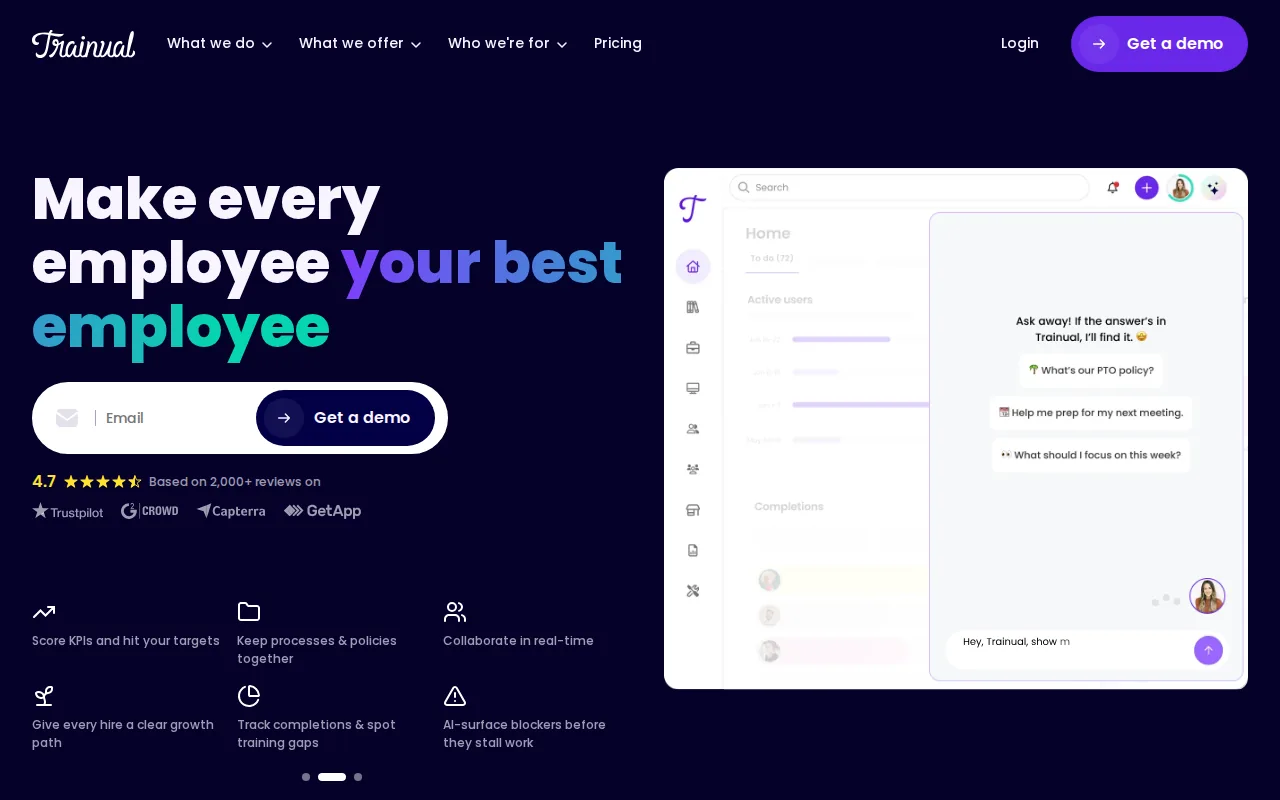
Managers can assign learning by role, then use completion tracking, quizzes, or e-signatures to check that staff have reviewed key information. That structure can help when a new server needs a clear path through menu knowledge and service steps, while a line cook needs station procedures.
Trainual also supports connections to HR and payroll systems, messaging apps, single sign-on, and other tools. Its AI can draft and refine training content and help identify gaps. Those functions may appeal to a restaurant that already keeps its processes in digital documents and wants to connect training to other workplace systems.
Its fit depends on how you want to build lessons. If the priority is documenting processes and linking them to connected systems, Trainual is worth a closer look. If you want AI to turn recipes, videos, and procedures into mobile lessons, Carvin is more directly focused on that workflow.
4. Operandio for HQ oversight and franchise simplicity
Operandio is a restaurant-focused platform for headquarters teams that need oversight and franchisees who need simple tools. It fits multi-unit operators who want to see training progress by brand, region, store, or employee.
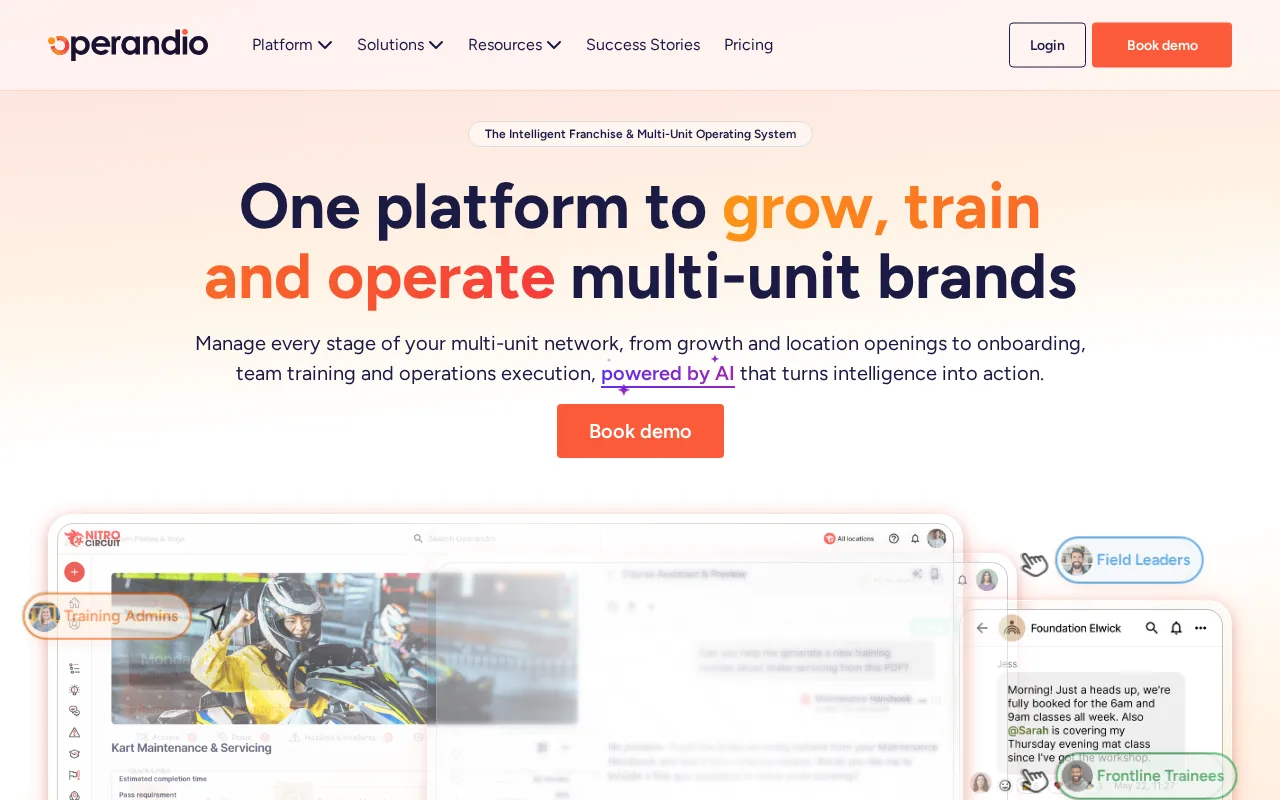
Operandio tracks progress automatically and gives leaders real-time visibility into training and compliance. Its restaurant LMS includes learning paths, courses, and quizzes. Staff can access the platform on a mobile device, and a kiosk app can support teams using a shared device.
For a franchise group, central visibility can help HQ spot a location that has not completed a new food safety course. Managers can then follow up with that team instead of relying on separate spreadsheets or verbal updates.
Operandio uses custom pricing based on business size, location count, and needs. Its pilot is paid and runs for 30 to 60 days. That gives an operator a way to test the setup with its own SOPs and training before making a longer commitment.
5. Integration-focused restaurant LMS
An integration-focused LMS is a category for restaurant groups that need training data to connect with systems they already use. It can suit an operator whose onboarding starts with HR records, or whose leaders need employee and training information in a shared workflow.
Before you shortlist a system, name the exact task an integration should handle. For example, should a new hire’s role trigger the right training? Should a location change update their learning assignments? Or do leaders mainly want fewer separate logins?
POS and inventory connections can be useful when a menu or recipe change needs to reach staff quickly. But a connection alone doesn’t make a training program useful. You still need clear lessons, a person responsible for updates, and a way to check completion.
Carvin’s strength is speed of content creation rather than a broad set of HR integrations. That can suit a restaurant that wants to launch training quickly and can manage employee assignments without deep system links. If integration is a firm requirement, write down the data that must move before you book product demos.
Pro Tip: Ask each vendor to show one real workflow, such as how a new line cook receives station training after being assigned to a location.
6. Mobile-first restaurant LMS for on-the-floor learning
A mobile-first restaurant LMS is built around staff who work on the floor or in the kitchen, not at a desk. This category suits restaurants where employees need to review a lesson between tasks or check a process on their phones.
Opus and Trainual have mobile training access. Carvin also creates mobile-ready modules from recipes, videos, and procedures. For a server, that might mean reviewing steps for a new menu item before service. A cook could revisit a recipe procedure before the next shift.
Test the employee experience on the device your team will use. Can a new hire find the right lesson quickly? Does the content work during a short break? Can a manager see who finished it without asking each person?
Offline learning is another point to check directly with a vendor. It matters in kitchens, basements, or back rooms where a connection can be weak. Don’t assume offline access just because a platform has a mobile app.
7. Food safety and compliance-focused restaurant LMS
A compliance-focused LMS helps operators assign required training and keep completion records together. It suits restaurants that need a repeatable way to cover food handling, sanitation, allergens, or local rules.
Make sure the course content matches your operation. Training written for food manufacturing may cover standards that differ from the needs of a restaurant kitchen. Review lessons for topics your staff actually handle, such as allergen cross-contact, handwashing, cleaning tools, and safe food storage.
Also check how the system handles reminders and proof of completion. During an audit or inspection, a manager should be able to find the right records without searching through emails or paper folders. A quiz can confirm understanding, but it won’t replace hands-on coaching for tasks such as cleaning equipment.
Build a short compliance path for each role. A dishwasher, server, and kitchen manager may share some required lessons, but their day-to-day risks differ. Keep the shared basics, then assign the added topics each role needs.
8. Multilingual or AI-personalized restaurant training
This category is for restaurants with varied language needs or many role-specific learning paths. It can help a group that wants staff to learn in a language they understand or wants training assignments to fit each job.
Opus describes automatic translation for training content into more than 100 languages. Trainual’s AI can draft and refine training content. Carvin uses AI to turn restaurant recipes, videos, and procedures into mobile-ready modules. Those are different uses of AI, so ask vendors to demonstrate the task you need.
For a restaurant, a translated lesson should preserve the meaning of a safety rule or recipe step. Have a qualified team member review key terms before assigning it broadly. A literal translation can be confusing when staff use local names for ingredients or equipment.
Personalized learning should also be clear to managers. You should know which lessons a server receives and why. Keep a common core for brand standards, then add role or location lessons where they make sense.
9. Gamified restaurant LMS for staff engagement
A gamified LMS uses features such as points, badges, or progress goals to encourage staff to finish learning. It may suit teams that respond well to visible milestones, especially during onboarding or a menu launch.
Use game elements to support a learning goal, not as a substitute for useful content. A badge for completing a food safety module can mark progress. But staff still need to understand the steps and show that they can follow them on shift.
Consider how the feature will feel across roles and schedules. A leaderboard may motivate one team and frustrate another if employees have different shifts or learning time. A simple progress bar or a team goal may be a better fit for a busy restaurant.
Run a small test with one role before rolling out a reward system to every location. Ask managers whether the tool makes it easier to coach. Check completion, then watch whether staff can apply what they learned during service.
10. Restaurant LMS for analytics, scale, and cost visibility
An analytics-focused LMS helps restaurant leaders compare training progress across teams and locations. It suits groups that need a clear view of who has completed required lessons and where managers should follow up.
Choose reports that lead to a next step. A completion report can show which store has overdue onboarding. Quiz results can point to a procedure that needs another explanation. If managers can’t act on a report, it may add noise instead of helping operations.
Ask what changes when you add locations, users, or extra features. Include the staff time needed to build and update content, plus the manager time spent assigning lessons and reviewing progress.
Carvin reports a 40% reduction in onboarding time, 6 to 8 hours saved per manager each month, and 92% training completion. Use those figures as a starting point for a local business case, then compare them with your own baseline and staffing needs.
Ready to get restaurant training running faster? Explore Carvin’s training platform and see how its AI-assisted content workflow fits your team.
Key Takeaway: The right reports show where training is complete, where it stalls, and which manager needs to act.
Restaurant LMS comparison table and selection checklist
Use this table to narrow your shortlist by operational need. The tools differ in focus, so compare the workflow you need rather than counting features.
| Option | Best fit | Standout focus | Check before choosing |
|---|---|---|---|
| Carvin | Hospitality groups that need quick training rollout | AI turns recipes, videos, and procedures into mobile lessons | How your team will handle HR data and employee setup |
| Opus | Multi-location brands | Mobile training and HRIS and data integrations | Which integrations match your current systems |
| Trainual | Teams documenting processes by role | Process training, AI content support, and system connections | How you’ll organize restaurant-specific lessons |
| Operandio | Franchises needing HQ visibility | Automatic progress tracking and compliance oversight | How the paid pilot fits your locations and needs |
| Integration-focused category | Operators with defined system workflows | Connecting employee or operations data | What data moves, and what task it triggers |
| Mobile-first category | Frontline teams learning between tasks | Phone-based access to lessons | Ease of use, connectivity, and offline needs |
Before you decide, ask each vendor to demonstrate your own workflow, not a generic sample. Use one recipe or procedure and test how it moves from draft to assignment, employee completion, and manager follow-up.
- Set the must-have roles, locations, and training topics.
- Choose whether integrations or fast content creation matter more.
- Ask how the team will update lessons after a menu or policy change.
- Compare the full cost, including the time needed to manage training.
- Run a small pilot with staff from more than one role or shift.
If you’re building a new hire path, the restaurant staff onboarding checklist can help you map the first lessons and manager check-ins.
FAQ
What is a restaurant LMS?
A restaurant LMS is software for assigning, delivering, and tracking staff training. It can hold onboarding lessons, role-based procedures, quizzes, or compliance courses in one place. Managers use it to see who has completed training and where follow-up is needed. A restaurant team may use it alongside hands-on coaching, not as a replacement for practice on shift.
What should a restaurant LMS include?
A restaurant LMS should make it easy to assign lessons by role and track completion. Mobile access matters for staff who work on the floor or in the kitchen. You may also need quizzes, compliance records, reporting, or system integrations. Start with the workflows your team needs today, then check whether the tool can support more locations later.
Can a restaurant LMS help with food safety compliance?
Yes, it can help assign food safety lessons and keep completion records in one place. Look for content that matches restaurant work and the rules that apply to your locations. Use quizzes or other checks to confirm learning, then coach staff on the floor. Keep course records organized so managers can find them when they need them.
How much does restaurant training software cost?
Restaurant training software pricing depends on the product and the size of your operation. Some vendors use custom pricing based on users, locations, or features. Ask for a full quote that covers any pilot, added locations, and features your team needs. Also account for the staff time required to create lessons and manage training.
How do I choose between Carvin, Opus, Trainual, and Operandio?
Choose based on the workflow you want to improve first. Carvin focuses on AI-assisted creation of mobile restaurant lessons. Opus fits multi-location operations with HRIS and data integrations. Trainual suits process documentation and connected systems. Operandio emphasizes HQ visibility into training progress and compliance across franchise locations.
Conclusion
For a restaurant group that wants training live quickly, Carvin is a strong fit in this shortlist: it turns recipes and procedures into mobile lessons and tracks completion. Start by choosing one role and one procedure, then see how Carvin can turn that material into your first training path.